
How to Check a Dog or Cat for Ticks (And What to Do If You Spot One)
Ticks are tiny parasites that are easy to miss, but checking your pet for ticks is crucial to reducing the risk of infestations. Examining your dog or cat for ticks is simple. Just look at the sneaky places that ticks tend to hide in and take appropriate steps to eliminate them.
In the United States, ticks are active year-round. So, it is important to learn how to spot a tick, what to do if you find one, and why a daily two-minute tick check must be in your pet care routine before these irritating pests put a whammy on you and your pet.
What Does a Tick Look Like?
Ticks can have different appearances based on their species. Generally, adult ticks appear as small insects with eight legs. They may be black, brown, gray, or tan and are about the size of an apple seed, flattened, and teardrop-shaped.
Engorged ticks (the well-fed, swollen ones) appear noticeably larger and more rounded than the unfed ticks. On the other hand, tick larvae are considerably smaller in size, about the size of a grain of sand, and appear as red or black specks.
Ticks usually burrow their heads into the skin for feeding, so you will only see the rest of their body while looking for one.
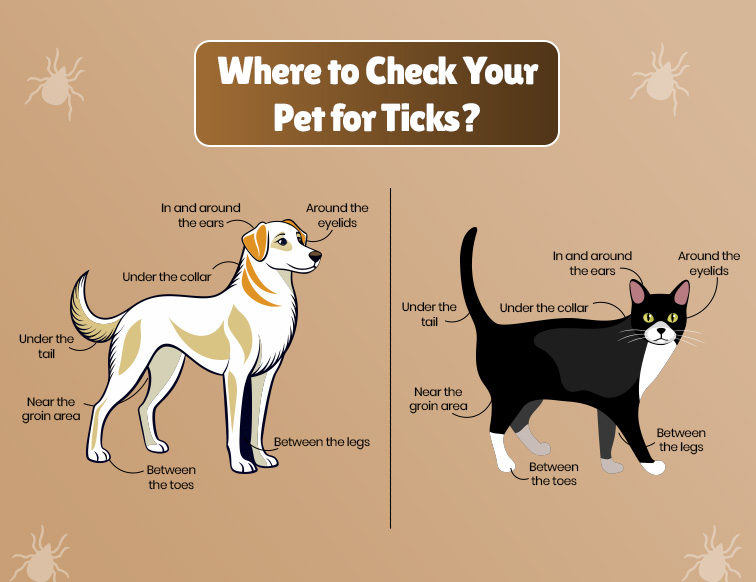
Where to Check Your Pet for Ticks?
Ticks love to hide in dark, moist places where they can usually go unnoticed. These are the common areas on your dog or cat’s body where these blood-sucking parasites are often found:
How to Find Ticks on Dogs or Cats?
The simplest way to find ticks on your pet’s body is to run your fingers through their fur to feel their skin for tiny bumps. If you feel a bump, part the fur in that area and inspect closely. Ticks hiding around the eyelids can often be mistaken for skin tags. In case of any doubt, use a magnifying lens and a flashlight to confirm the presence of the tick.
If you don’t spot anything unusual during the initial check, use a flea comb to skin through the fur with precision. A flea comb will not remove ticks, but will help you neatly part your pet’s fur in suspicious areas, allowing for deeper examination.
How to Remove a Tick from a Dog or Cat Safely?
If you spot a tick on your pet’s body, the next step is to remove it promptly and safely. Follow these simple steps to remove a tick from a dog or cat:
- Take tweezers or a tick removal tool.
- Grasp the tick close to the pet’s skin.
- Gently pull the tool outward.
- Ensure that the entire tick is removed.
- Discard the tick in a sealable jar.
- Clean the affected area with a pet-safe antiseptic.
Any part of the tick left behind could lead to infections. It is important to ensure that you do not squeeze the tick’s body as you remove it. Tick remover tools like a tick twister or tick hook can help minimize the accidental squeezing.
Stay calm and focused while removing a tick and never pull it off with your fingers. Always wear a pair of gloves during this process and wash your hands thoroughly afterwards.
If you are not using a tick preventive for your pet, you must consult a veterinarian to get a recommendation for your cat or dog. It is the safest way to safeguard your pet from ticks.

Why Routine Tick-Checks are Important for Pets?
Routine tick checks are more than just a grooming habit; they are a vital part of protecting pets from discomfort and health risks. Tick bites can cause irritation, redness, and inflammation, often leading to excessive scratching or licking that may result in secondary skin infections.
Ticks are also known to carry serious illnesses that can affect both pets and humans, making early detection and removal essential. Incorporating a daily tick check into a pet care routine significantly reduces the chances of transmission. Even a quick two-minute inspection can make a meaningful difference, especially after outdoor visits.
Prevention plays an equally important role in keeping your pet safe from ticks. Using a reliable tick preventive for your pet, along with consistent flea and tick treatments, also helps create a strong line of defense against infestations. Products like Frontline Plus, Seresto Collar, and Credelio are commonly recommended options that offer effective tick prevention when used as directed.
Parting Words
Ticks can become a serious problem if left unchecked. By learning where to look, how to identify them, and the correct way to remove them, you can greatly reduce the risks associated with tick infestations. Staying proactive with both regular checks and tick prevention for pets helps ensure their safety and well-being.
If you want a better understanding of the tick lifecycle and the diseases they can transmit, explore our detailed article on everything you should know about ticks on dogs and cats.