
Which Flea & Tick Chewable is Right for Your Dog – NexGard or Simparica?
Dog parents who love taking their pets for regular walks are always at risk of encountering fleas or ticks. And if you’ve listed your flea and tick protection down to NexGard and Simparica, you’re probably doing what most responsible dog parents do. Let’s double-check everything before you decide on “THE ONE” for your dog.
Both are vet-prescribed monthly chewables designed to simplify flea and tick prevention compared to messy spot-ons. But once you start comparing them, all the little details matter. Let’s break it down clearly.
What are NexGard and Simparica?
Both NexGard and Simparica are monthly oral chews that protect your dog from fleas and ticks. These vet-recommended treatments effectively kill adult fleas and help prevent flea infestations while controlling infestations caused by various tick species that may potentially transmit harmful diseases to dogs.
Both NexGard and Simparica treat and control ticks such as black-legged ticks, American dog ticks, lone star ticks, and brown dog ticks. Additionally, NexGard covers longhorned ticks, while Simparica offers protection against Gulf Coast ticks. However, they require a prescription from a veterinarian, based on the condition of your pet.
How Do They Work?
Both NexGard, which contains afoxolaner, and Simparica, which contains sarolaner, are members of a class of parasiticides known as isoxazolines. Once administered, the treatment is absorbed into the bloodstream of your pet. As a result, if a flea or tick bites your pet, the active ingredient it ingests begins killing fleas within hours of administration.
This type of oral treatment does not require a protective coating on the surface of the skin. Many pet parents find it convenient that it works well even if their pet swims or bathes.
Similarities between NexGard and Simparica
- Both are monthly treatments.
- Both are available in chewable form.
- Both protect against fleas.
- Both protect against multiple tick species.
- Both are widely used in veterinary practice.
So, the choice between these two is often a matter of eligibility, availability, suitability, or veterinary preference.
Difference between NexGard and Simparica
This is often where things get more practical, and decision-making starts.
Dog Age Considerations
- NexGard is indicated for dogs and puppies at least 8 weeks old and at least 4 pounds of body weight.
- In the U.S., Simparica is approved for dogs 6 months of age and older, and weighing at least 2.8 pounds.
Thus, if you have a small 10-week-old puppy who has just started exploring the backyard, NexGard is the suitable chewable option. For older puppies and adult dogs, they are both viable options. Your vet will take into consideration the age, weight, vaccination schedule, and overall condition of your dog in order to recommend the appropriate treatment.
Dog’s Minimum Weight
Both products come in different weight-specific packs.
- NexGard is generally indicated for use in dogs at least 4 pounds of body weight.
- Simparica is indicated for the treatment of dogs 2.8 pounds of body weight or more.
Please ensure you weigh your dog accurately prior to the start of treatment.
Flavors
This may sound a little problematic until you’ve tried to treat a stubborn dog. Most dogs accept them as a treat. Others act suspiciously if you try to give them anything new.
- NexGard chewable has a beef flavor.
- Simparica is a great-tasting chew.
If your dog is extremely picky, then flavor alone can make your decision easier. Honestly, a product that gets eaten willingly every month seems like a practical solution.
Effectiveness
Both Simparica and NexGard show very strong and very comparable performance.
In laboratory studies by respective manufacturers, Simparica was shown to start killing fleas within three hours after dosing and to have over 96.2% reduction in fleas after eight hours. Simparica also demonstrated 100% effectiveness in killing adult fleas within 24 hours after treatment for the full 35 days.
NexGard also had a fast start, with fleas killed within four hours after dosing and over 99% effectiveness after eight hours. Again, 100% effectiveness in killing adult fleas within 24 hours after infestation was demonstrated and sustained throughout the monthly dosing period.
When it comes to ticks, both products have demonstrated high effectiveness against major tick species.
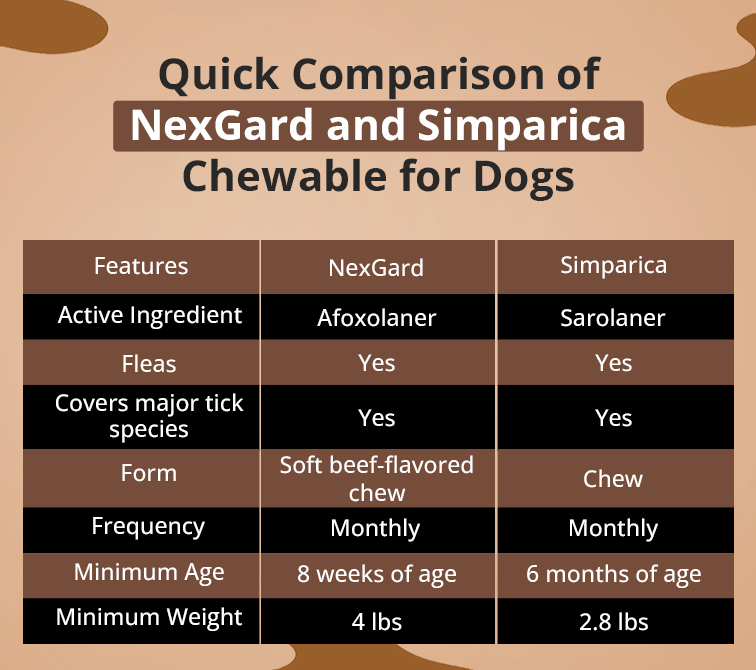
Quick Comparison of NexGard and Simparica Chewable for Dogs
Here’s a clear side-by-side overview:
So, Which Flea and Tick Chewable is Right for Your Dog?
Well, for a healthy dog, either of these products works well. NexGard and Simparica are two of the most common flea and tick preventatives prescribed by vets. As far as deciding between the two, there are a few real-world factors at play. These include
- Your dog’s age,
- Your dog’s weight,
- Taste preference,
- What your vet recommends, and
- What you’re comfortable giving your dog every month.
While NexGard and Simparica have their differences, they’re far closer to each other in formula and function than they are in competition. For most healthy dogs, either option works well; the bigger question is which one fits your dog’s age and medical history.
Note: Pet parents should consult their veterinarian to ensure the treatment is suitable for dogs with a history of seizures or neurological conditions.
In fact, the best flea and tick preventative for your dog may simply be the one your dog enjoys taking each and every month. While this may seem simplistic, if you’re still having trouble deciding between the two, your best bet is to have an open and honest talk with your vet. Discuss your concerns with them, your dog’s behavior and routine, and everything in between. The more information your vet can get; the better advice they can give.
Frequently Asked Questions
1. Can I switch my dog from NexGard to Simparica?
Yes, but check with your vet first to ensure it’s safe for your dog’s age, weight, and health.
2. How quickly do NexGard and Simparica work?
Both start killing fleas within hours. Tick protection is fast, too, though timing varies by species. Monthly dosing helps maintain continuous protection.