
Protect Your Pet: Understanding the Flea and Tick Life Cycle
Flea and tick infestations are one of the most common challenges that pet parents are forced to combat. The pesky organisms infest our furry companions and subject them to itching, skin conditions, hair loss and a wide range of vector-borne diseases. Therefore, it is crucial for us as pet parents to ensure that our pals remain free from fleas and ticks. If you’re new to pet parenthood and don’t know how to keep these harmful organisms at bay, don’t worry, as we’re here to help. In this blog, we’ll discuss how to break the flea and tick life cycle so as to keep your pet safe and in the best of its health. Read on to find out more.
Life Cycle of Fleas & Ticks
Here’s a quick glance at the life cycle of fleas and ticks.
Flea Life Cycle
Fleas are known to undergo a complete metamorphosis during their four unique life stages, namely egg, larva, pupa and adult.

Egg
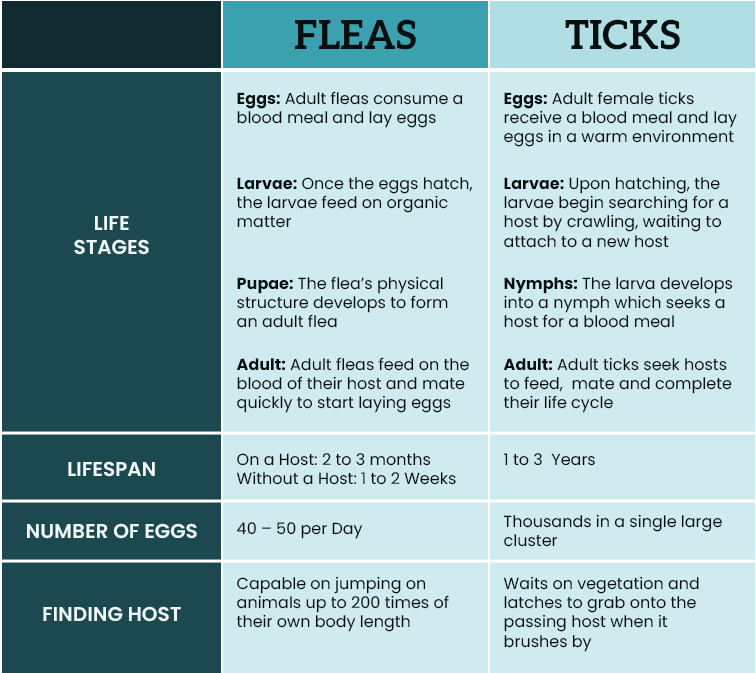
Female fleas consume a blood meal and lay eggs usually on the pet or on areas frequented by the pet like its bedding, carpets and cracks on flooring. According to studies, a female flea can lay between 40 and 50 eggs per day. The eggs generally hatch in 2 to 14 days, depending on the humidity and warmth they receive.
Larva
Once the eggs hatch, the larvae typically survive by feeding on organic matter like adult flea feces, dead skin and dried excrement. These provide them with nutrients essential for their growth and development. The larva usually takes from 8 to 24 days to develop. Once they’re developed, they spin silk cocoons and reach the pupa stage which collects debris and dirt to camouflage the pupa.
Pupa
In the pupa stage, the flea’s physical structure develops and it turns into an adult. Under normal household conditions, a newly emerged flea lasts a week without a blood meal and if the conditions are not favorable, it can last up to a year.
Adult
Once the flea has turned into an adult, it feeds on the blood of its host. Once they’ve fed on the blood, they mate quickly and start another cycle by laying eggs. According to studies, adult fleas can remain alive from several weeks to a year. However, it depends on their species and access to a host.
Tick Life Cycle
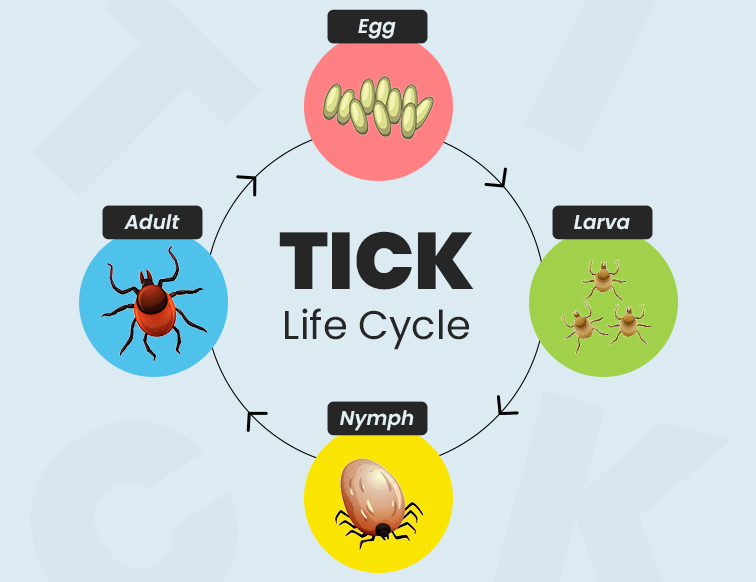
The life cycle of ticks comprises four main stages, which are egg, larva, nymph and adult.
Egg
Once an adult female tick receives a blood meal, it mates with an adult male tick and lays eggs in a warm environment. The eggs can take from 2 weeks to 2 months to hatch into six-legged larvae.
Larva
Upon hatching, the larva looks for a host to attach to. Once the parasite has attached to a host, it feeds on its blood and goes through various stages of molting before developing into a nymph.
Nymph
After receiving an adequate amount of blood from the host, the larva develops 8 legs and molts for around 2 weeks before developing into a nymph. The nymph then seeks a host to attach to and feed on its blood.
Adult
Once the tick has reached its adult stage, it becomes sexually mature and thus ready to reproduce. Therefore, it seeks larger animals as its host to feed and mate. Female ticks feed longer and lay thousands of eggs in their brief lifetime, male parasites generally die after mating.
Difference Between the Life Cycles of Fleas & Ticks – A Detailed Analysis
How to Break Flea and Tick Life Cycles?
Below are some of the effective ways that can help you break flea and tick life cycles so as to ensure the good health and comfort of your pets.
- Treat your pets with flea and tick preventives all year round. Especially, the ones that are designed to eliminate adult and immature stages of the parasites help prevent re-infestations.
- Wash your pet’s bedding regularly with hot water and a pet-friendly disinfectant formula to eliminate any eggs or larvae concealed inside the bedding.
- Vacuum your furniture, pet bedding and carpets frequently to remove eggs, larvae and pupae.
- Maintain a closed watch on your pet and check daily for fleas and ticks, especially after its outdoor walks.
- Make use of a flea and tick comb to eliminate fleas or flea dirt.
- If you have a yard that is frequently visited by your pet, keep it clean and well-maintained. Make sure to trim the bushes, mow the grass and discard leaves and litter and debris to prevent fleas and ticks from infesting.
- Use pet-friendly environmental cleaning products to treat parasitic infestations in your outdoor areas.
Frequently Asked Questions
1. How important is environmental cleaning to break the flea and tick life cycle?
Environmental cleaning is crucial to break the life cycle of fleas and ticks. It is important that you vacuum the carpets and furniture and also wash pet beddings with hot water to eliminate any eggs, larvae and pupae.
2. Where are flea eggs generally found?
Apart from your pet’s body, flea eggs can be found in your pet’s bedding, furniture, carpets, clothing and outdoor areas like yards and porches where pets visit frequently.
3. What are some of the most effective flea and tick preventives on the market?
Some of the best flea and tick preventives for dogs and cats are:
Dogs:
Cats:
- Credelio
- Capstar (flea only)
- Selehold (flea only)
- Advantage Multi (flea only)
4. How long can fleas live without a host?
Adult fleas can survive for 1 to 2 weeks without a blood meal from a host.
5. Can fleas survive the winter?
Yes, fleas can survive indoors during winter. While prolonged freezing temperatures can kill outdoor fleas, your heated home provides the perfect environment for all stages of the flea life cycle to continue through winter.
Wrapping Up
Breaking the flea and tick life cycle is highly important to ensure the well-being of your pet. Therefore, you must adopt a consistent approach that is effective on all life stages of these external parasites. Always remember that cleanliness and careful vigilance are the keys to breaking the reproductive cycles of fleas and ticks.
At PetCareSupplies, we carry the above-mentioned flea and tick treatments for dogs and cats at discounted prices. Visit our online store to enjoy unbeatable offers on your favorite treatments and a wide range of other pet essentials.