
Omega-3 Supplements for Dogs: All You Need to Know
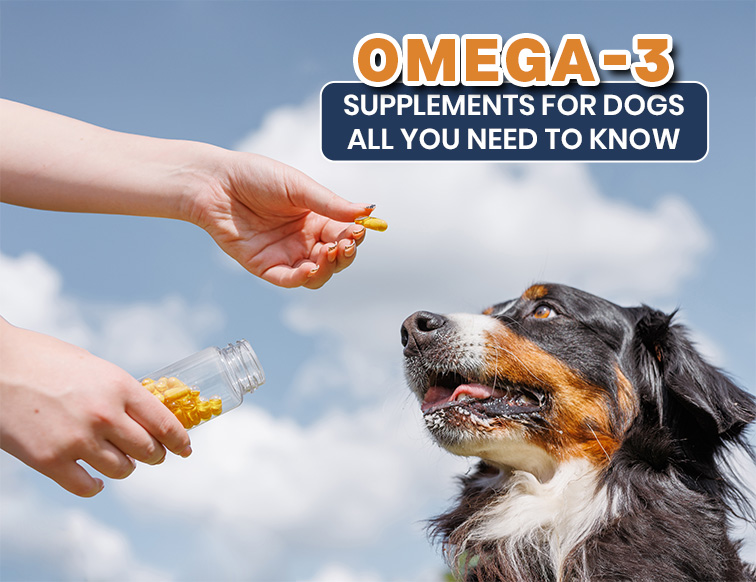
Like their human companions, even dogs need health supplements to stay healthy and happy. However, if we have to speak about the most important nutrients for dogs, they will certainly be Omega-3 fatty acids. They are essential polyunsaturated fats that your dog’s body cannot produce on its own. Therefore, it is crucial to incorporate this component into your dog’s diet to support overall vitality. If you’re new to dog parenthood and want to know more about the importance of Omega-3 for your dog, you’ve come to the right place. In this blog, we will discuss the importance of Omega-3 for your dog’s health and wellness.
Read on to find out more!
Why Are Omega-3 Supplements Important for Dogs?
Here’s why Omega-3 Supplements are important for dogs.
- Skin & Coat
One of the best ways to take care of your dog’s skin and coat is by offering them Omega-3 fatty acid supplements. It helps enhance a dog’s skin and coat by reducing inflammation, controlling itching, and retaining moisture for a shiny, healthy, and dandruff-free coat. These supplements also strengthen the skin barrier against allergens, soothe irritation, and boost the healing of skin problems.
- Joint & Bones
Omega-3 fatty acid supplements can significantly benefit your dog’s joint and bone health by reducing inflammation. They also reduce pain and stiffness in dogs. Additionally, they serve as effective supplements for arthritis in dogs. The supplements further help manage degenerative joint conditions by protecting cartilage, improving mobility, and increasing activity levels in senior dogs.
- Heart & Circulatory System
Omega-3 fatty acids support a dog’s heart and circulatory system through several key mechanisms. They reduce inflammation, lower blood pressure, and manage heart-related muscle loss (cardiac cachexia). They also improve heart function by stabilizing heart rhythms, reducing arrhythmias, lowering triglyceride levels, and improving overall circulation.
- Cognitive & Brain Functions
Omega-3 supplements enhance a dog’s cognitive function by fostering brain development in puppies and protecting cognitive health in seniors. These fatty acids reduce brain inflammation, improve learning and memory, and help manage canine cognitive dysfunction (CCD), which can reduce anxiety in older dogs.
- Immune System Support
Omega-3 supplements benefit a dog’s immune system by reducing chronic inflammation and modulating the activity of immune cells. They provide the essential fatty acids EPA and DHA, which dogs cannot produce themselves and help balance immune responses to protect against infections and autoimmune disorders.
- Healthy Eyes
Omega-3 supplements help foster proper retina development in puppies, maintain photoreceptor cell function, and reduce inflammation. They also aid in the prevention of age-related retinal degeneration, improve tear production for dry eye conditions, and assist in transmitting images to the brain.
Why Natural Sources of Omega-3 Are Not Enough for Most Dogs?
Natural sources of Omega-3 are not enough for most dogs, as they often fall short because dogs are highly inefficient at converting plant-based ALA (alpha-linolenic acid) into the essential “active” forms of Omega-3 like EPA and DHA. While whole fish do provide Omega-3 directly, the high-heat processing of commercial kibble often oxidizes these delicate fats, making them ineffective.
Furthermore, to reach the therapeutic levels of nutrients required to combat inflammation or joint disease, a dog would need to consume an impractical amount of calories from whole foods. Therefore, concentrated supplements are usually necessary to ensure high appropriate levels of Omega-3.
Frequently Asked Questions
1. Can I offer my dog human-grade Omega-3 supplements?
It is generally not recommended to administer human-grade Omega-3 supplements to dogs. Human supplements may contain flavorings or artificial sweeteners like xylitol, which is highly toxic to dogs. Additionally, the concentration of EPA/DHA is tailored for humans, making it difficult to dose safely for dogs.
2. How long do Omega-3 supplements take to show positive results in dogs’ health?
Omega-3 supplements typically take 4 to 6 weeks of consistent use to show visible improvements in a dog’s skin, coat, and mobility. Reduced itching or increased energy may appear within 2–3 weeks. However, chronic conditions like arthritis often require 8–12 weeks to subside.
3. Are Omega-3 supplements safe for puppies?
Omega-3 supplements (especially fish oil) are generally safe and beneficial for puppies, supporting brain development, the immune system, skin, and joint health. DHA is particularly critical for cognitive development. However, always ask your vet for the correct dosage based on your puppy’s weight.
4. How much Omega-3 should I give my dog daily?
Dosage of Omega-3 depends on the dog’s size, health requirements and concentration of the supplement. Therefore, you should follow your veterinarian’s specific guidance to determine the appropriate dosage of Omega-3 for your pet.
5. How do I know if Omega-3 is already present in my dog’s food?
While many high-quality kibbles feature Omega-3, the amounts are often minimal. Furthermore, the high-heat processing of dry food frequently oxidizes these delicate fats, destroying their health benefits before they are consumed.
6. Can Omega-3 help my dog with allergies?
Yes, Omega-3 can help regulate the immune system’s response to allergens, which can significantly reduce skin redness, swelling, and chronic itching.
7. When should I avoid giving my dog Omega-3 supplements?
If your dog has pancreatitis, clotting disorders, or is scheduled for surgery, consult your vet before administering Omega-3, as high doses of the nutrient can have a mild blood-thinning effect.
8. Which is among the best Omega-3 supplements for dogs?
While there are excellent Omega-3 supplements available on the market, Lamberts High Potency Omega 3s for Dogs is one of the best.
Wrapping Up
Incorporating high-quality Omega-3 supplements, specifically those rich in EPA and DHA, is important to enhance your dog’s long-term health and vitality. They not only help manage potential health conditions like arthritis or allergies, but also result in happier and more active life for your dog.